
THE JOURNEY OF
RONALD STEPHEN MCCOY
1930-2026
by Dennis Loh Kok Kin
Scholar,
Sportsman,
Gentleman,
Nobel Laureate
|
In the most ancient Sanskrit text - the Rigveda - the Ashvini Kumaras are divine horsemen, and supreme deities of medicine, safeguarding, and rescue. As if rigged by Vedicine prophecy, on 5 May 1930, in the Chinese Year of the Horse, came galloping a future scion of medicine, of safeguarding, and of rescue - Ronald Stephen McCoy. Seremban claimed him first, but Kuala Lumpur and Petaling Jaya would win his heart for life. Drafted for worldly service by Stephen James McCoy (a Malayan of Anglo-Indian descent) and Lylith Erin van Cuylenburg (of Dutch burgher descent), Ronnie learned early from the rough and tumble of Pasar Road, where the government quarters was home for the McCoys. Nor was formal learning neglected. Maternal guidance in reading, writing, and spelling already put him ahead of his peers in Primary 1 at the Pasar Road School. Even the Japanese Occupation, so disruptive to daily life, was no curb to his intellectual growth. He attended Japanese schools and took private tuition in English and Mathematics from the father of a future schoolmate. It was in the fire of wartime that some key lessons of safeguarding were forged for life: Thus shaped, after peace returned, he was to be tested on the anvils of the Victoria Institution. First, there were the teachers. A Changi-hardened ex-POW and avid scientist as Headmaster (Mr Frederick Daniel), and a no-nonsense vestige from the staff of the first V.I. Headmaster (Mr Ganga Singh) were among the keenest influences on Ronnie. Then there were the unrelenting activities in which Ronnie helmed the school teams for hockey, football, and cricket, played even more sports, led his sports house, dispensed ducal prescriptions in The Merchant of Venice on the VI stage, and still had spare ammunition to emerge as top student of the senior forms (Forms 4 and 5). Along the way, he led the V.I. as School Captain in 1948 and 1949. "Ronnie was not only the chief among the lads, he won the Rodger Scholarship, captained the cricket eleven, and what else? You name it, he captained it. His great asset: a telling and serious calmness, a capacity for warm laughter which pierced through awkward situations, and an always relaxed athlete's body to go with the clear-cut mind," recalled Dr T. Wignesan, a 1950 Victorian and, later, a member of the pioneer generation of Malayan Literature in English. "For us, the youngest in the classes, Ronnie was the Real McCoy!" In later years, Ronnie paid back, and more than paid back, his Old School in time, expertise, and funds. Who can ignore his role in the Centenary Celebrations Committee of 1993, setting up four scholarships (in the names of Messrs Ganga Singh, S.V.J. Ponniah, Foo Chong Choon and himself), and as senior advisor and supporter of the VIOBA and its Foundation? Such mettle in safeguarding the V.I. hence laurelled him with the 'Victorian of the Year 2004' and 'Victorian: Gentleman, Scholar, Sportsman 2018' awards. Ronnie McCoy dan Victoria Institution berpisah tiada! Like the Ashvini steeds of lore, Ronnie's deeds did not wait long to land for the people of his beloved country. Upon leaving the V.I. in 1949, he was received into the pioneering cohort of medical students at the new University of Malaya. There, he captained the hockey and cricket teams, represented the university in football and rugby, and served as President of the Athletic Union. Elected to the Students' Council in his freshman year, he rose from Secretary-General to President. Posted thereafter to the General Hospital Kuala Lumpur (GHKL), he assisted Derek Llewellyn-Jones, the obgyn whose 'Everywoman' and 'Everyman' tomes sat nearly everywhere parenting books were found. "He was a wonderful person as a doctor and as a teacher. He had wonderful attitudes in medicine and was full of infectious enthusiasm. Those six months with him made me decide to be an O and G (Obstetrician and Gynaecologist)." (Ronnie). 20,000 babies by his reckoning were to be delivered over his long illustrious career. So healing and pulling became Ronnie's calling. Armed with the MRCOG after two years in Oxford and Leeds, he returned in 1963 to serve at GHKL until conscience did make no coward of him. In 1965, pained by poor hospital conditions, he lamented unrestrained in the Malay Mail: "As a result, I was persona non grata with the Ministry of Health! They said they were going to transfer me out of K.L. I was very cross about this and I resigned." GH's loss became Assunta Hospital's gain. Nine years later, Ronnie and several colleagues set up Pantai Medical Centre in Bangsar, where he served until he retired in 1996. But why retire, despite his better half's sagely opinion that he should have spent another 10 years riding the horse of medical practice? The truth was that Ronnie was now eager to tame the mare of nuclear war, and rescue humanity from catastrophe. In 1995, the Canberra Commission on the Elimination of Nuclear Weapons was convened. Ronnie was one of a group of seventeen distinguished and eminent persons from 12 countries appointed by former Australian Prime Minister, Paul Keating to propose practical measures for the elimination of nuclear weapons. The report was tabled with the Australian government, and then with the United Nations. Ronnie's preoccupation with nuclear disarmament was sown when, as a schoolboy, he read John Hersey's visceral Hiroshima, which told the stories of six survivors of the atomic bomb dropped on Hiroshima. In 1986, Ronnie joined the International Physicians for the Prevention of Nuclear War (IPPNW) UK chapter. A year later, he founded the Malaysian affiliate. Later he was elected Vice-President, and then Co-President of IPPNW. The University of Malaya MBBS ethics group invited him to give an annual lecture on nuclear disarmament and the work of the IPPNW from 2008 to 2013. Sensing the need to creatively invigorate efforts globally, Ronnie assembled a broader coalition under IPPNW, to form the International Campaign to Abolish Nuclear Weapons (ICAN) in 2007. Ten years later, Ronnie's brainchild to rescue society from nuclear fallout was awarded the Nobel Peace Prize. His deep social convictions made him a lifelong NGO stalwart. He served as a member of the Aliran Board of Trustees, Vice-President of the International Movement for a Just World, a founding member of the Kuala Lumpur Society for Transparency and Integrity (an affiliate of Transparency International), and a member of the National Art Gallery Board of Trustees in the 1970s and 1980s. Later, even with (or due to the) eight decades behind him, zeal undimmed, he championed governance reform, including delivering a keynote speech at the launch of Bersih 2.0. There, he told his audience: "...(Only when) we totally dismantle racial politics and racial political parties... then can we begin to eradicate increasing racial polarisation and unite the country as a nation of Malaysians; not Malays, not Chinese, not Indians, and certainly not Others, as I am." While Ronnie had many visions, his first loves were always his children and his wife. In 1959, he married Susheila Beatrice Vethavanam, herself a V.I. girl (1950-1951). Their two sons and a daughter - Stephen, David, and Ruth - have worn the family badge of public service throughout their lives. Susheila was the first Malaysian female civil servant and, later, a champion of the Rio (environmental) Agenda; Stephen, a humanitarian and sustainability protagonist; David, a professor of public health; Ruth, a lawyer experienced in UN, government, and public policy work. Ronnie's credo flashes in his actions and shines in the output he helped create. It was reflected in the seminal 1999 "Health For All" report issued by a committee of MMA experts, which stated: "The health system must be driven by human values, targeted on health gains, centred on the needs of the community, focused on quality of health care, based on sound financing which ensures universal coverage and equitable access, and oriented towards primary health care." This report commemorated the 40th anniversary of the MMA which had been founded by Ronnie, with several others, in 1959. He became MMA president in 1995. Meanwhile, recalling the atomic bombings of Japan that ended World War II, Ronnie said, "The second bombing was inexcusable." Expending energy begets energy, at least in Ronnie's world. A dedicated father, heart-filled doctor, inspiring activist, indefatigable old boy, his world never shied from action and activity. At a UN conference on disarmament in Geneva 2016, he had a breakout session in a side room with only one way out - through the main conference room. When Ronnie's meeting ended, the Hibakusha group in the main room was still recounting their pains of nuclear fallout. Respectful and unwilling to disrupt that session, Ronnie's group was forced to prepare to climb out of the window. The 30-somethings in the room began assembling chairs to jump over the windowsill. But before they commenced, the octogenarian had already leaped over the sill like a gymnast with graceful landing outside! Age before beauty, as Ronnie was wont to quip. Ronald Stephen McCoy has indeed lived a wonderful life, saving others from sorrows, reducing their terrible heat, providing safe sleep, and filling their lives with prosperity. * * * * * Growing Up  At the V.I.  McCoy (standing second from right) in the 1947 Cricket team coached by cricket legend Lall Singh (seated centre)     At the University  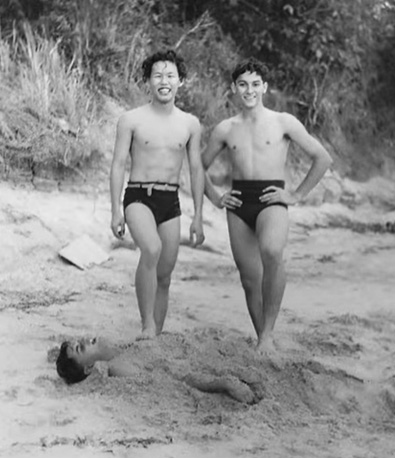 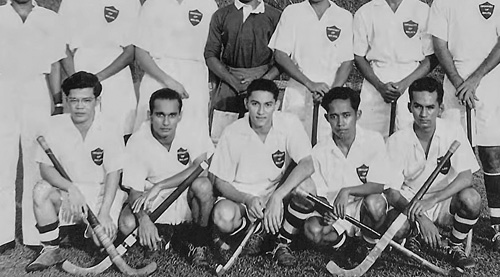 Working Days  First job at the KL General Hospital  Three of 20,000 babies he delivered  Years and years ago, he delivered the babies of these admiring VI mothers ! (2015) Saving the World    Speaking at the Bersih 2.0 launch, MBPJ Civic Centre, PJ (2010)    In New York with ex-Russian Premier, Mikhail Gorbachev (right)    Speaking to ICAN campaigners in Geneva (2016)  Representing ICAN at the United Nations   Interviewed in his home about ICAN (2017)  Speaking to reporters after his Nobel award was announced (2017) The Faithful Old Victorian  Receiving the VIOBA Victorian of the Year award for 2004  V.I. Hall, 1997  Attending the VI Reunion at Singapore (2015)  Speaking at the VI 125th Anniversary celebrations (2018)  Giving a press conference at the VI during its 125th Anniversary celebrations (2018)  Four Victorians, including McCoy (second from right), honoured by the VIOBA for their contributions to school and nation (2018)  Participating in a sketch at the VI Genting Reunion (2018) The Family Man  Wedding (1959)  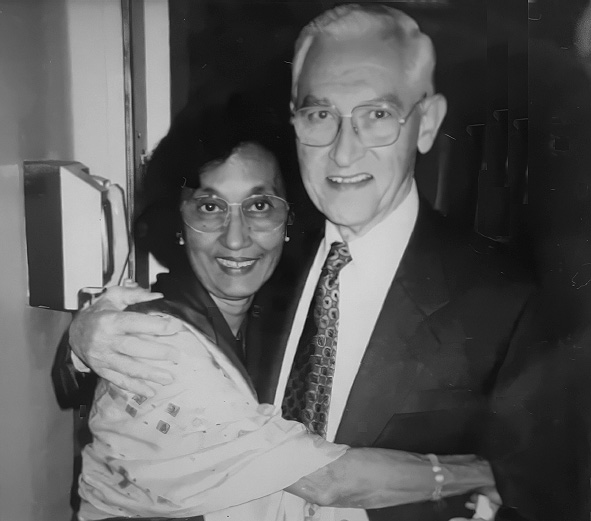    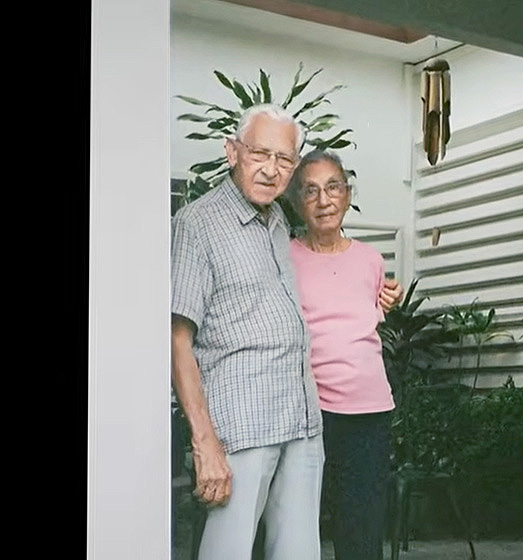 The Memorial Service    His Descendants 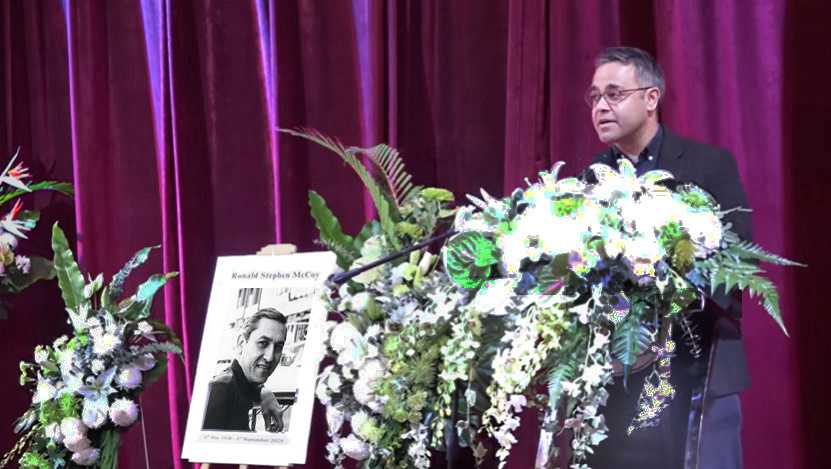 Tribute by Avinash Pradhan, his former neighbour and son of 1968 VI School Captain, Vinayak Pradhan 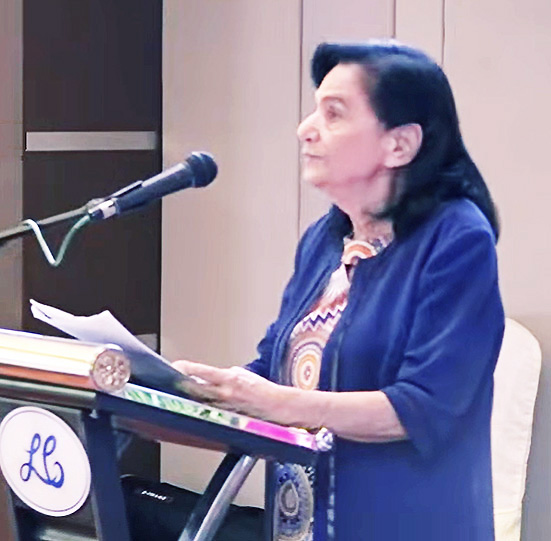 Mavis Puthucheary recounting her University days in the 1950s with Ronnie 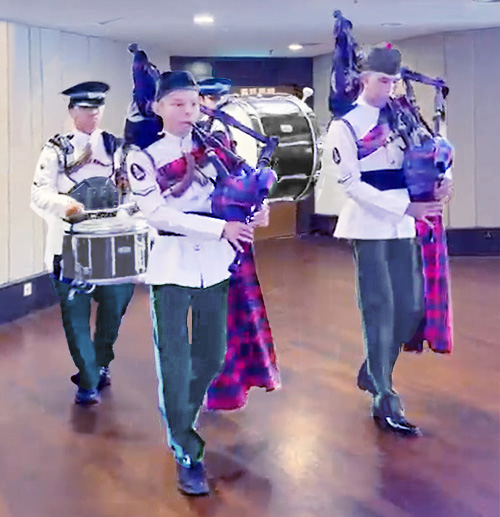 The VI Cadet Corps Band capping the service with... 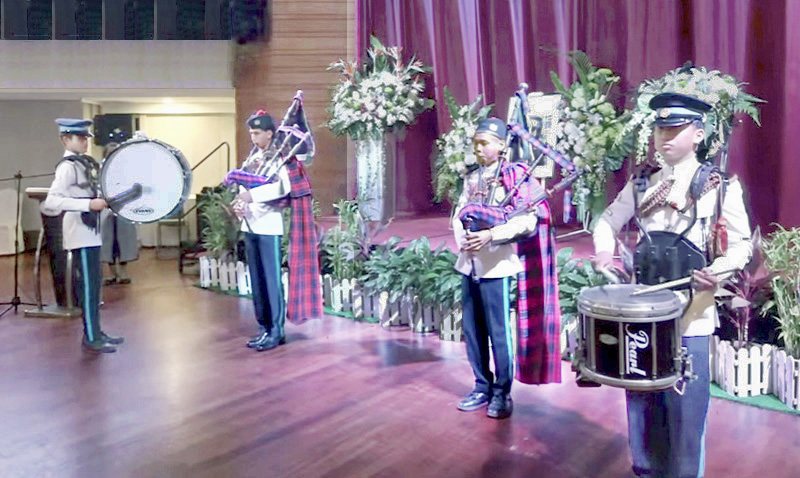 ... a farewell from his Old School - Auld Lang Syne and Road To The Isle 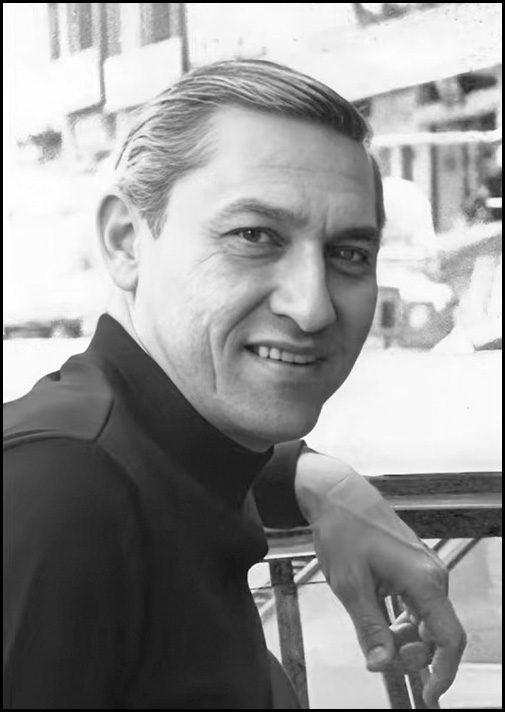 Ronald Stephen McCoy 1930 - 2026 Click here for Tributes from family and others Click here to watch the Memorial Service   The V.I. Web Page
Last updated on 12 September 2026.
PageKeeper: |